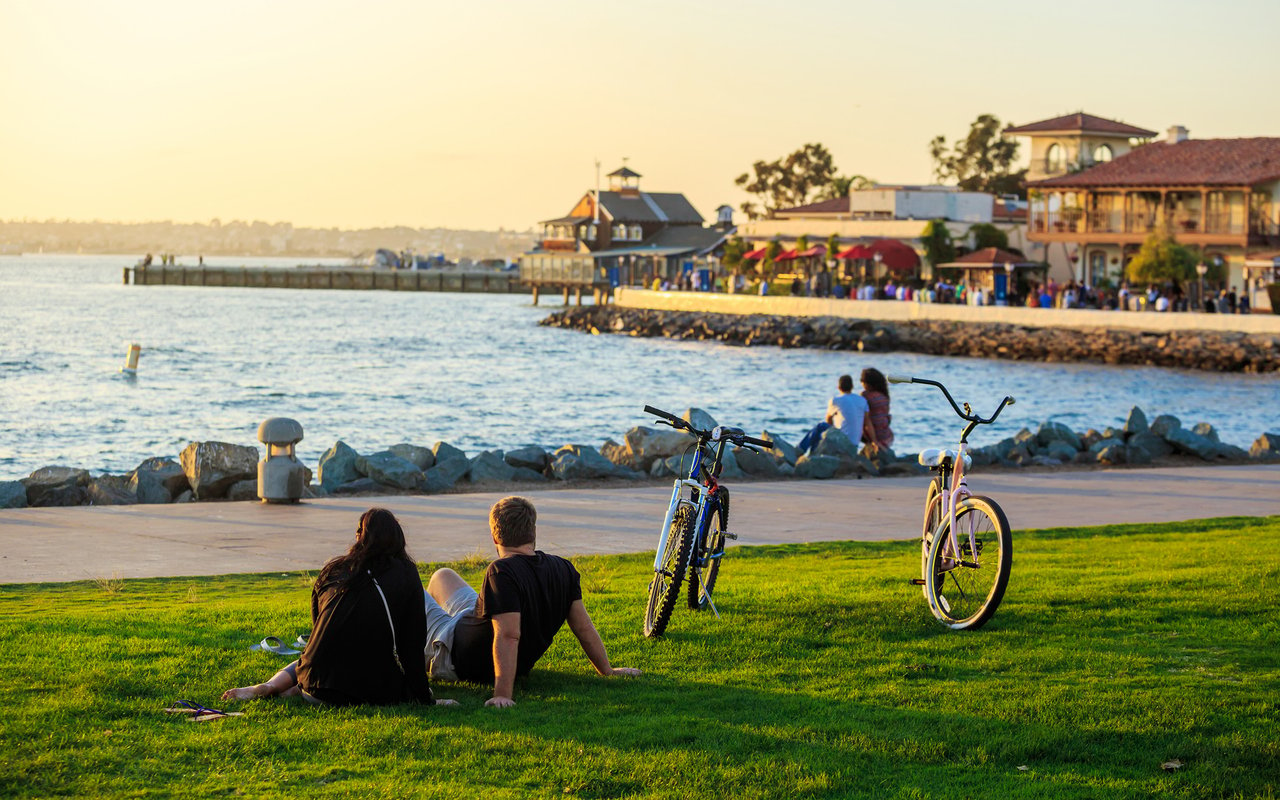
On September 22, the gates went up at Torrey Pines State Natural Reserve. Chain link now blocks the road that climbs from the entrance kiosk to the upper lots, and the trailheads that usually fill with hikers before 8 a.m. sit empty. The lodge is shuttered for the season. This isn't a weekend closure or a trail rerouted around a fallen tree. It's the second phase of a construction project that will keep the reserve off limits until roughly March 2027, and it's arriving in a neighborhood that also happens to be adding more places to eat, gather, and spend an evening than it has in years.
Those two facts aren't unrelated. The reserve draws about four million visitors a year, most of them locals working a loop trail into a morning routine. Take that away for five months and the neighborhood doesn't get quieter. It gets busier somewhere else.
Why the gate stays locked this long
The current closure is phase two of a project that began in November 2025, when crews spent four months replacing underground water, sewer, electrical, and telecommunication lines beneath the reserve. That work stayed mostly invisible to hikers, since the beach trail and both beach parking lots remained open throughout. Phase two is different. It closes everything: all trails, the Beach Trail Staircase, the lodge, and both upper parking lots, to pedestrians, cyclists, and vehicles alike.
The scope explains the timeline. State Parks is installing a new restroom facility, adding accessible parking stalls and a paved pedestrian path from the lot to the lodge, and replacing the park road from the south gate to the west parking lot. None of that is quick work inside a natural reserve, where excavation near coastal sage scrub and the Torrey pine grove requires the kind of monitoring you wouldn't need on an ordinary construction site. The reopening date isn't arbitrary either. Full access is expected back by March 1, because construction has to pause before the California gnatcatcher, a threatened species that nests in the reserve, enters its breeding season.
What doesn't close is Torrey Pines State Beach itself. The North Beach and South Beach parking lots stay open, so the sand is still reachable. What's gone for the winter is the loop up top, the sandstone overlooks at Razor Point and Yucca Point, and the steep half mile down to Parry Grove. If your fall routine ran through any of those, it's rerouting to the beach itself or somewhere else entirely.
The commute gets tighter at night, too
A few blocks away, a second project is reshaping a different kind of daily habit. Starting October 6, crews begin replacing the guardrail on westbound Torrey Pines Road between Coast Walk and Prospect Place with a permanent steel bridge rail. The current barrier is a temporary K-rail installed after a car left the road and ended up in a private yard on Coast Walk back in 2018. A permanent fix has been under discussion since 2021, and it's finally underway.
The work runs at night, from 7 p.m. to 3 a.m., Sunday through Thursday, specifically to keep daytime traffic on this thoroughfare clear. During those overnight hours, the northern westbound lane and the bike lane close. As the project progresses, the sidewalk on that stretch closes too, with pedestrians directed to the south side of the road. It's scheduled to continue through March, which means anyone walking, biking, or driving that section after dark between now and next spring should expect a detour, not a shortcut.
Where the calendar picks up the slack
If the reserve closure pulls foot traffic away from the bluffs, the Village is stepping in fast. Lower Girard Avenue turns into an open-air gallery again on October 10 and 11 for the La Jolla Art and Wine Festival, which brings more than 170 artists from across the United States and Mexico to the half mile stretch between Prospect Street and Torrey Pines Road. It's free to walk, open-air, and pet-friendly.
The festival's footprint is bigger than the two days it runs. Since its founding, the nonprofit La Jolla Art and Wine Festival Foundation has raised more than $1.7 million for educational programs across five schools in the La Jolla Cluster: Bird Rock Elementary, La Jolla Elementary, Torrey Pines Elementary, Muirlands Middle School, and La Jolla High School, reaching more than 4,000 students a year. Geppetto's Toys, the San Diego-owned retailer marking its own 50th anniversary this year, has supplied the festival's family art center since the very first event in 2008, an 18-year run of sponsorship that predates most of the restaurants now opening a few blocks away.
And a new list of places to eat afterward
That's the other half of this fall's shift. The Village has spent the past year closing a gap locals have joked about for a decade: plenty of views, not enough reason to stay out late. Fleurette, a French restaurant inside La Jolla Commons with dual wine rooms and a glassed front patio, opened in December 2025 and has held onto a reputation as one of the hardest reservations in San Diego ever since. Katsuya Ko followed in February 2026 with a robata-centered room at UTC. JOEY La Jolla opened its doors to full capacity on April 23, 2026, bringing late-night dining to a corridor that mostly shut down after dinner.
More is arriving before the year is out. Ikaria, from the team behind Puesto and Marisi, is opening this year at One Alexandria Square near Torrey Pines Golf Course, with a Mediterranean menu and programming that includes cooking classes and wine tastings. On Girard, a new café called Cala takes its name from La Jolla Cove and is set to open this year, and Cazadores Mexican Grill is adding to the Village's list of Mexican restaurants with a new location on Wall Street. Down the block, Roseacre, a multi-venue dining project with Michelin-starred chef Erik Anderson as culinary director, has drawn attention from anyone walking past its prominent Girard Avenue storefront long before its doors open.
None of this cancels out the closures. A morning hike up to High Point Overlook isn't the same experience as a walk down Girard for tacos, and no restaurant opening replaces four million annual visits to a state reserve. But the timing lines up in a way worth noticing. The two projects taking the most territory away from daily routines this fall, the reserve and the road, are both scheduled to wrap by next March. The festival and the restaurant list aren't temporary substitutes. They're what the Village looks like now, closure or not.
For the next five months, La Jolla's center of gravity sits closer to sea level than usual, on Girard Avenue and Wall Street rather than up the coastal bluff. That's not a downgrade. It's just where the neighborhood is spending its evenings until the gate at Torrey Pines opens again.
Curious how a season like this one shapes what a La Jolla property is worth to the people living in it, not just to the market? Brigitte Adams and Brien Metcalf have been tracking this neighborhood long enough to know the difference between noise and a real shift. Reach out anytime you want a local read on what's changing.